

Nearly half of Americans are grappling with the monthly burden of rent or mortgage payments, a stark indicator of the persistent affordability crisis plaguing the U.S. housing market, according to a fresh survey released by real-estate brokerage Redfin.
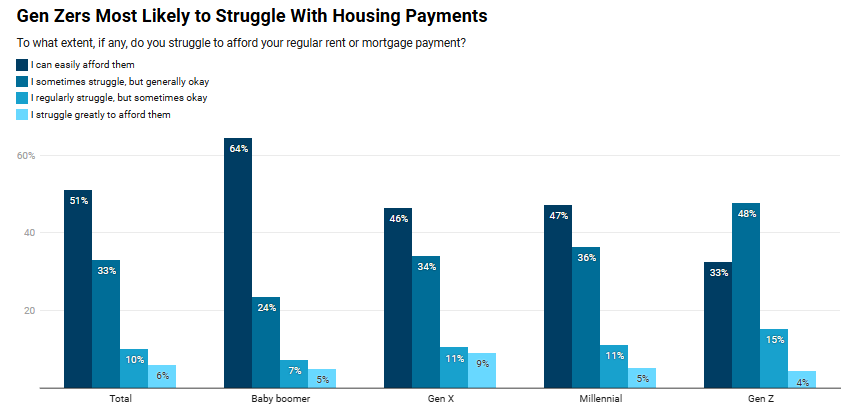
The poll reveals that 49% of U.S. residents report difficulties in keeping up with their housing costs, up from 44% in a similar survey last spring. The strain is disproportionately felt by younger generations, with two-thirds of Gen Z adults–those born between 1997 and 2012–admitting to significant challenges, compared with just over half of millennials and Gen Xers, and only about a third of baby boomers.
Conducted by Ipsos on behalf of Redfin in November 2025, the survey polled 4,000 adults nationwide. Respondents were classified as struggling if they described their situation as either a “great struggle” to afford housing or one where they “regularly struggle but are sometimes okay.”
This escalation comes amid elevated home prices and borrowing costs that continue to outpace income growth. The median U.S. home-sale price in November hovered at levels requiring an annual household income of around $111,000 to comfortably afford a typical property–well above the national median income of about $86,000. Mortgage rates, while off their peaks, remained stubbornly high, adding to the barriers for prospective buyers.
“Young buyers are sitting on the sidelines because of sky-high housing expenses coupled with broader economic jitters,” said Desiree Bourgeois, a premier agent with Redfin in Detroit. “Fears over job stability, potential tariffs, and the risk of declining property values are keeping them out. First-time homeownership feels like an insurmountable hurdle right now.”
The fallout extends far beyond monthly bills, forcing many to make tough trade-offs in their daily lives and long-term plans. Among those facing affordability woes, 39% have cut back on dining out, while 34% are forgoing vacations. More than one in six are picking up extra work hours or selling personal items to make ends meet.
The sacrifices can be even more profound: 15% report skipping meals, 14% are postponing necessary medical care, and smaller shares–around 4% each–are delaying starting families or relinquishing pets to alleviate financial pressure.
Gen Z bears the brunt of these adjustments. In this group, 35% are eating out less frequently, 18% are skipping meals altogether, one in five have sold belongings, 18% have taken on side gigs, and 15% have returned to live with parents to cope.
These pressures are also eroding pathways to homeownership, a cornerstone of the American dream. Just 27% of Gen Z adults own homes, far below the rates for older cohorts: over half of millennials, and more than 70% for both Gen X and baby boomers.
Yet, there are tentative signs of easing ahead. Homeownership among younger Americans edged up slightly in 2025, buoyed by modest improvements in affordability. Economists anticipate further relief in 2026, with mortgage rates expected to settle around 6%, home-price appreciation slowing, and wages potentially rising faster than housing costs.
Even so, the survey highlights a widening chasm between soaring real-estate expenses and stagnant earnings, especially for those at the entry level of the market. For countless young Americans, incremental lifestyle tweaks are proving insufficient to close the divide, raising broader questions about economic mobility in a post-pandemic era.
Sign Up Free | The WPJ Weekly Newsletter
Relevant real estate news.
Actionable market intelligence.
Right to your inbox every week.
Real Estate Listings Showcase
Please visit:
Our Sponsor
