

Rents Surged in 2025 as Supply Hits 20-Year Low in 2026
Ireland’s rental market tightened dramatically in early 2026, with nationwide rents climbing 4.4% in 2025 amid record-low supply, according to the latest quarterly Rental Report from property portal Daft.ie.
The report, authored by Ronan Lyons, professor of economics at Trinity College Dublin, shows market rents accelerated from a 3.6% increase in 2024, continuing a long-term upward trend. Rents have now risen in 13 of the past 14 years, standing 34% above pre-Covid levels and nearly 80% higher than a decade ago.
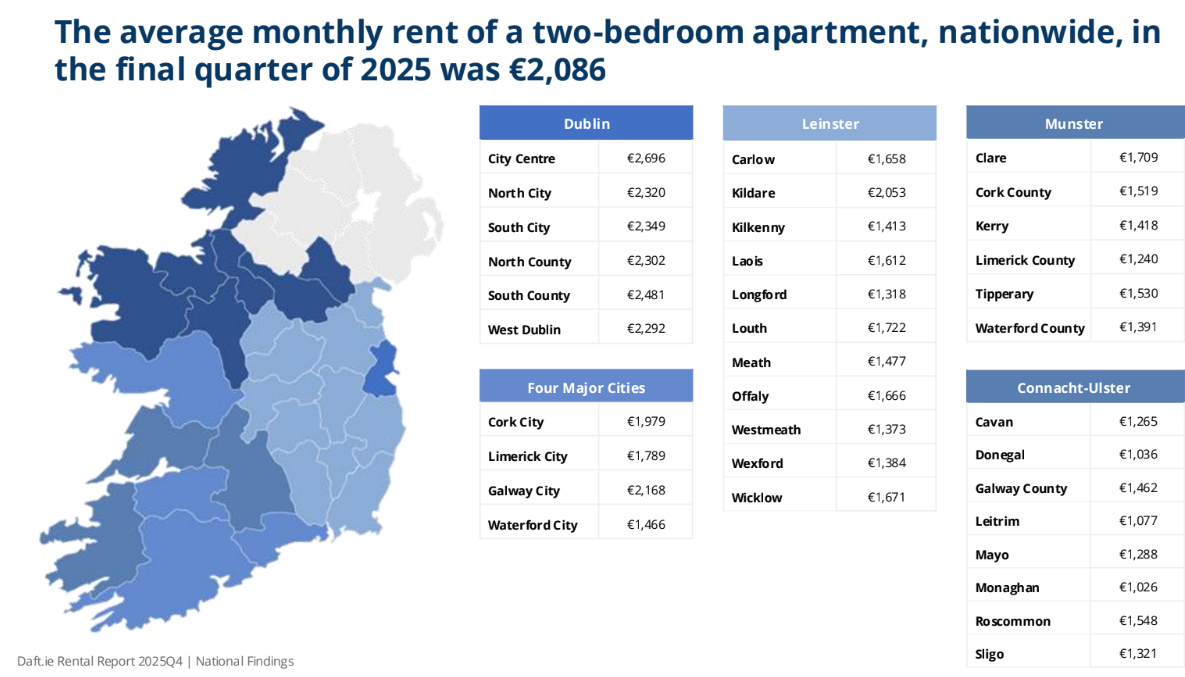
The average monthly rent for a two-bedroom apartment nationwide during the final quarter of 2025 reached €2,086, reflecting persistent pressure on affordability in one of Europe’s most supply-constrained housing markets.
Availability plunged to unprecedented lows. On February 1, 2026–just days before new national rent-control measures took effect–fewer than 1,800 homes were listed for rent across the country, a 22% drop from the same date in 2025 and the lowest February figure since records began in 2006.
The squeeze was especially severe in Dublin, where listings fell more than one-third year-over-year, pushing the average two-bedroom apartment rent to €2,438 (with city-center properties approaching €2,700 in some reports).
Outside the capital, rental inflation proved even sharper in Ireland’s other major cities during the fourth quarter:
- Galway: Up 11.4%, average two-bedroom rent €2,113
- Cork: Up 7.5%, average €2,013
- Waterford: Up 6.9%, average €1,525
- Limerick: Up 5.0%, average €2,127
In non-urban areas, annual increases hovered around 6% in Leinster and Munster, and 5.1% in Connacht-Ulster.
Lyons attributed the worsening shortages partly to “widespread uncertainty” surrounding impending reforms to rent controls, which replaced localized Rent Pressure Zones with a nationwide system effective March 1, 2026. The changes cap annual increases at 2% (or the lower CPI inflation rate) for new tenancies and introduce other tenancy protections, but do not apply retroactively to existing leases.
“Widespread uncertainty about the new rent controls appears to have exacerbated ongoing supply shortages in the rental market,” Lyons wrote. “It remains to be seen whether supply is holding off until new tenancy terms come in on March 1st or whether the change in rent controls has led to a further reduction in the stock of rental homes, as landlords sell up.”
The data underscore Ireland’s chronic rental imbalance, where demand far outstrips supply despite moderating inflation rates compared to pandemic-era peaks. With availability now roughly two-fifths of the 2015-2019 average in many regions–and far lower outside Leinster–analysts warn that underlying pressures point to continued upward momentum in 2026 unless new construction accelerates significantly.
Sign Up Free | The WPJ Weekly Newsletter
Relevant real estate news.
Actionable market intelligence.
Right to your inbox every week.
Real Estate Listings Showcase
Please visit:
Our Sponsor
