

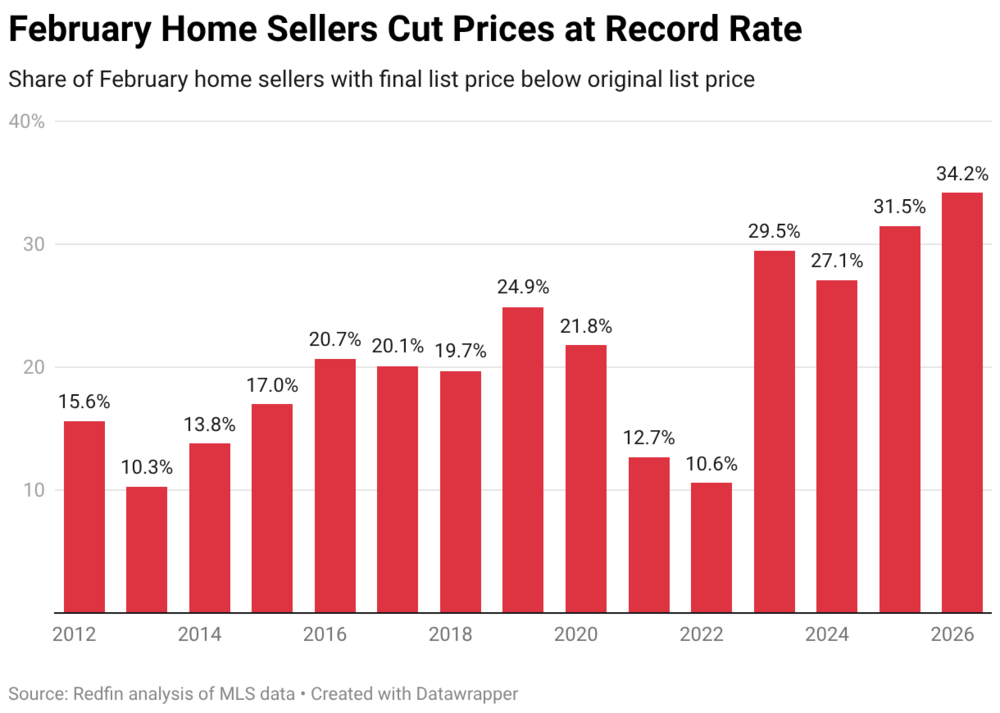
More than one-third of U.S. home sellers reduced their asking prices in February 2026, the highest share for the month in more than a decade, underscoring a housing market increasingly tilted in favor of buyers, according to data from brokerage Redfin.
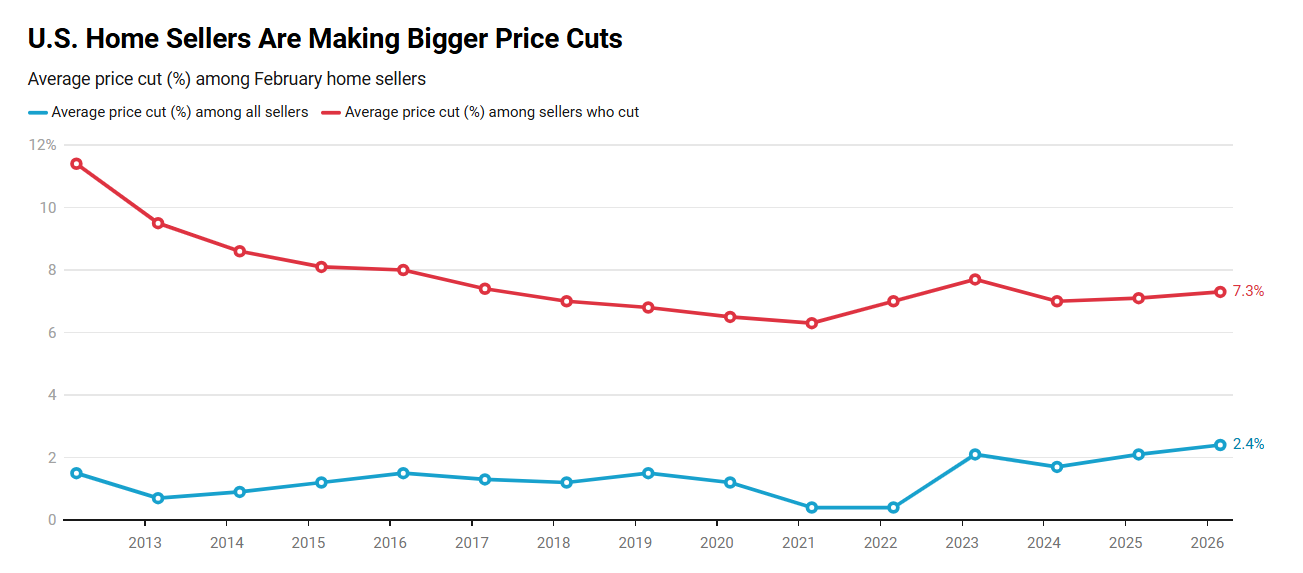
A total of 34.2% of sellers lowered their list price during the month, up from 31.5% a year earlier and the highest February share in records dating back to 2012. The average reduction among sellers who cut prices was $40,915, or 7.3%, the largest percentage decline for a February since 2023.
Across all home sales–not just those with price reductions–the average seller cut equated to $13,463, or 2.4% off the original listing price, also a February record in percentage terms, according to the analysis of MLS data.
The findings point to a market in which elevated mortgage rates, high asking prices and broader economic uncertainty have weakened buyer demand, leaving sellers with more inventory competition and less pricing power.
“The market is very different in spring versus fall,” said Aditi Jain. “Some homeowners need to move immediately, but those who can afford to time the market may get a better price.”
The data also show a rising share of sellers opting to delist and relist properties rather than cut prices immediately. Roughly 45,000 homes previously taken off the market were relisted in January, the highest January total on record since 2016, according to Redfin. Analysts say this strategy can obscure the true incidence of price reductions, since cuts made before delisting are not always captured when homes re-enter the market.
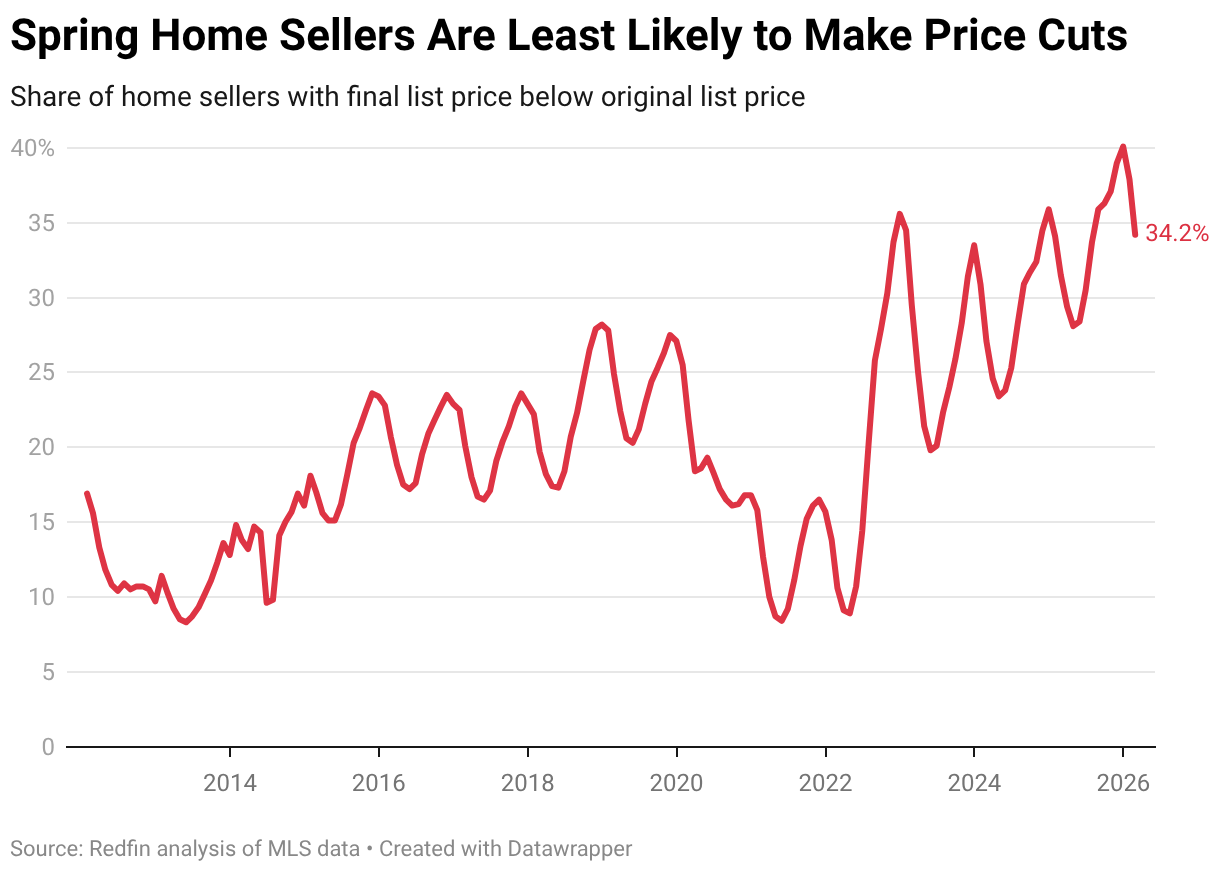
Seasonality remains a key factor in pricing behavior. Spring typically offers sellers the strongest environment to avoid reductions, with April or May producing the lowest share of price cuts in most recent years, while winter–particularly December–tends to see the weakest outcomes.
Sellers who have owned their homes for less than two years were most likely to cut prices, with 37.4% doing so in February. That compares with 34.9% among owners of two to seven years and 31.8% for those holding properties longer than seven years.
The pattern reflects lingering effects of pandemic-era home purchases, when prices surged rapidly in many markets. In several regions, subsequent price stagnation or declines have left some recent buyers closer to breakeven or underwater, increasing pressure to adjust expectations to current market conditions.
Regional disparities were pronounced. In San Antonio, 57.9% of sellers reduced asking prices, the highest share among major U.S. metros. It was followed by Austin, Dallas, Tampa and Fort Lauderdale–markets that have seen significant new construction and rising inventory levels.
Texas and Florida, in particular, have emerged as buyer-leaning markets due to elevated supply, with Florida also facing additional pressure from rising insurance costs, natural disaster risk and higher condominium association fees.
At the other end of the spectrum, West Coast tech hubs showed far fewer price reductions. In San Francisco, just 7.4% of sellers cut prices, the lowest among major metros, followed by San Jose, Newark, Oakland and Seattle. In many Bay Area submarkets, pricing strategies often begin below perceived market value to stimulate bidding wars, reducing the need for subsequent reductions.
The data suggest a housing market increasingly defined by divergence: softening pricing power in high-supply Sun Belt markets, and relative resilience in constrained coastal metros–even as national averages point toward growing buyer leverage.
Sign Up Free | The WPJ Weekly Newsletter
Relevant real estate news.
Actionable market intelligence.
Right to your inbox every week.
Real Estate Listings Showcase
Please visit:
Our Sponsor
