Median Prices Climb to $6.8 Million in March as Demand Surges
San Francisco’s luxury housing market is staging a powerful comeback–one increasingly defined by the rise of artificial intelligence and the wealth it is generating, according to new data from Redfin.
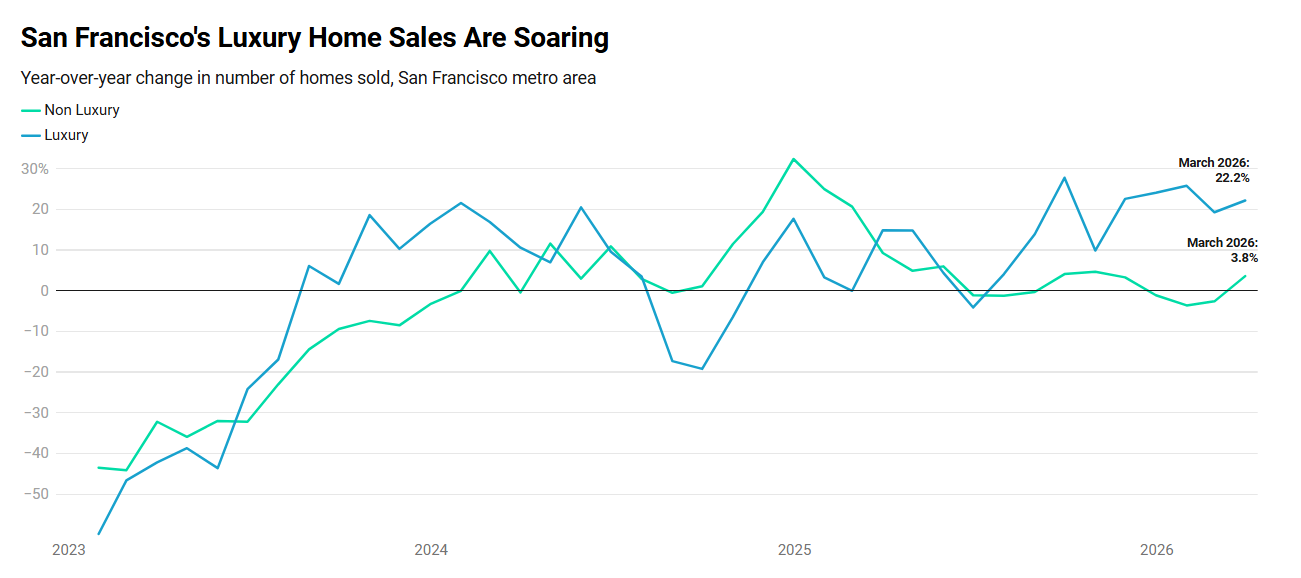
Sales of high-end homes in San Francisco climbed 22.2% in March 2026 from a year earlier, the fifth consecutive month of double-digit gains and among the strongest increases across major U.S. metros. By contrast, non-luxury sales rose just 3.8%, underscoring a widening gap in demand.
At the center of the rebound is AI–now acting as an economic engine for the city’s housing market after years of uncertainty. The rapid expansion of firms such as OpenAI and Anthropic has created a new class of ultra-high-earning buyers, many of whom are channeling unprecedented compensation packages into real estate.
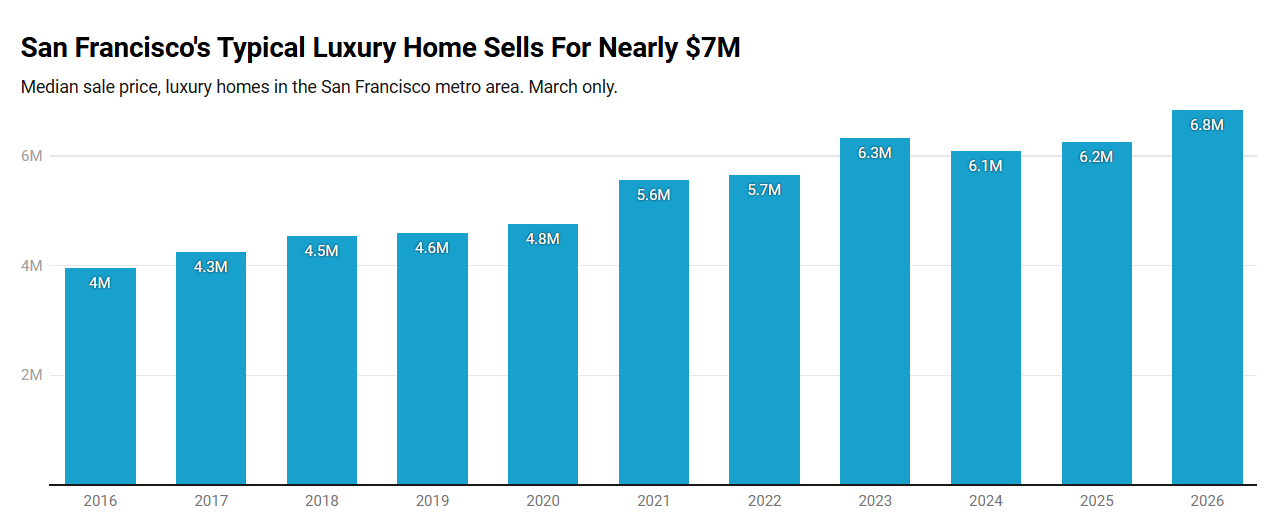
That influx of capital is translating directly into price growth. The median luxury home sold for $6.81 million in March, up 9% from a year earlier and the highest level ever recorded for this time of year, according to Redfin. Prices for non-luxury homes were effectively flat.
The speed of the market tells a similar story. Luxury homes went under contract in just 12 days on average–down sharply from 28 days a year earlier and the fastest pace among the largest U.S. cities. Nearly two-thirds of high-end homes sold within two weeks, the highest share in more than a decade.
The resurgence marks a sharp reversal from pandemic-era fears that San Francisco’s housing market faced a prolonged decline as residents decamped for lower-cost regions. Instead, AI has reshaped the city’s economic foundation, pulling talent–and wealth–back in.
Inventory constraints are amplifying the effect. The number of luxury homes for sale fell more than 15% from a year earlier, extending a multi-year contraction in supply. While new listings are beginning to tick higher as sellers try to capitalize on rising prices, demand continues to outstrip availability, intensifying competition and driving bidding wars.
The result is a market where AI is not just supporting demand–it is effectively resetting the ceiling for what buyers are willing and able to pay.
Nationally, however, the picture remains far more subdued.
Across the U.S., luxury home sales fell 2.4% in March, while prices rose 3.6% to about $1.4 million–the slowest growth rate in five years. Higher borrowing costs and persistent economic uncertainty, including geopolitical tensions tied to the conflict involving Iran, are keeping many would-be buyers on the sidelines.
Elsewhere, gains are uneven. Luxury prices rose most in Tampa, Philadelphia and Kansas City, while sales activity surged in Tampa and Detroit. In contrast, transaction volumes declined sharply in Los Angeles and parts of the New York metro area.
The divergence highlights how localized forces are increasingly shaping U.S. housing outcomes. In San Francisco, the AI boom has not only stabilized the luxury market–it has reignited it, transforming a once-questioned recovery into one of the strongest performances in the country.
Sign Up Free | The WPJ Weekly Newsletter
Relevant real estate news.
Actionable market intelligence.
Right to your inbox every week.
Real Estate Listings Showcase
Please visit:
Our Sponsor
