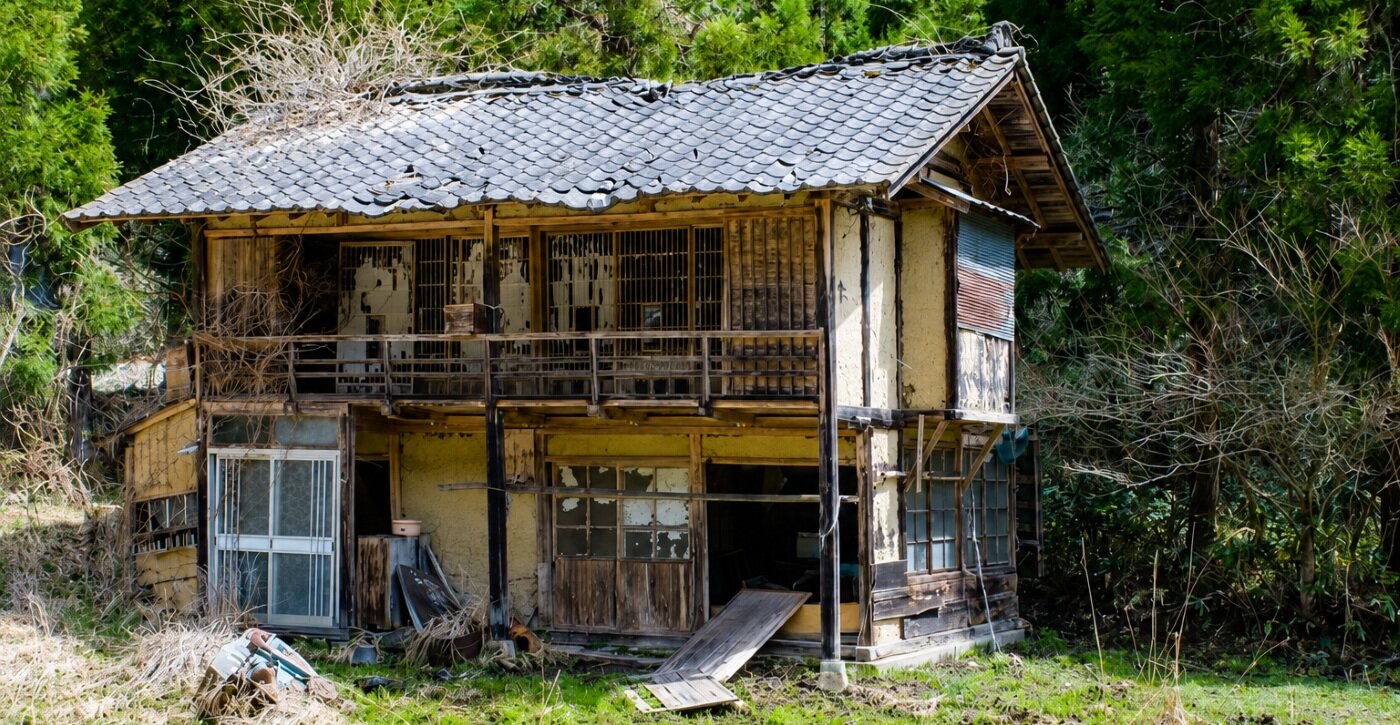
Across Japan’s shrinking rural towns and aging suburban districts, abandoned homes are quietly reshaping the country’s property market, forcing policymakers, banks, developers, and local governments to confront the unintended consequences of demographic decline.
Japan now has roughly 9 million vacant homes — known locally as “akiya” — according to the country’s Ministry of Internal Affairs and Communications, representing about 14% of the nation’s housing stock. In many prefectures, entire neighborhoods are gradually hollowing out as elderly homeowners die and younger heirs decline to occupy or maintain inherited properties.
What began as a rural issue has evolved into a broader structural challenge for the world’s third-largest economy.
For decades, Japan’s population decline and rapid urbanization have concentrated economic opportunity in major metropolitan centers such as Tokyo, Osaka, and Nagoya, while smaller regional cities and villages steadily lost residents. Younger generations migrated toward employment hubs, leaving behind aging parents and family homes that often carried more emotional attachment than financial value.
When those properties pass through inheritance, heirs frequently discover the economics no longer make sense.
Many older homes require extensive renovations to meet modern earthquake standards or energy-efficiency expectations. Annual maintenance costs, property taxes, insurance expenses, and legal complexities surrounding inherited ownership can quickly exceed the market value of the structure itself. In some rural regions, homes are effectively worth less than the land beneath them.
The result is a growing inventory of neglected properties that local governments increasingly view as both an economic and public-safety burden.
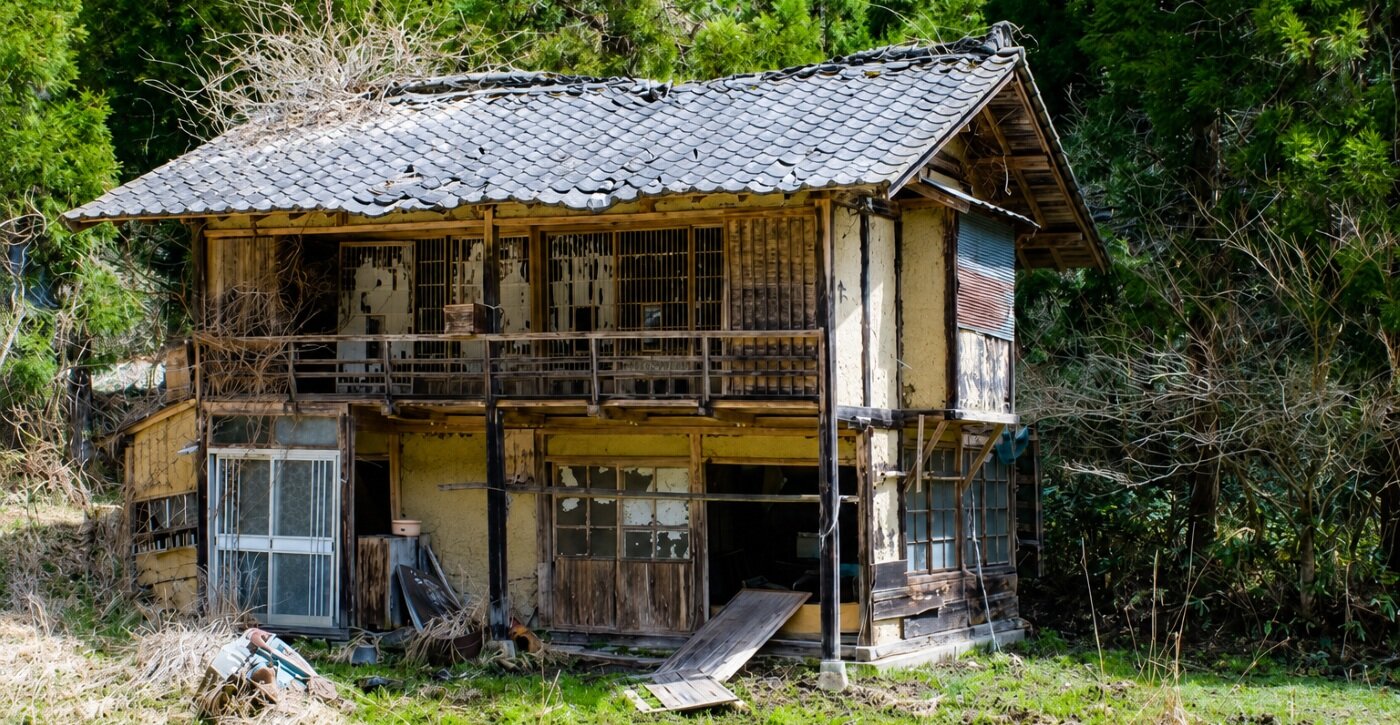
Vacant homes have become associated with collapsing roofs, overgrown vegetation, fire hazards, and declining neighborhood aesthetics, placing downward pressure on surrounding property values. Municipalities across Japan are spending more resources monitoring deteriorating structures and, in some cases, subsidizing demolitions.
The phenomenon is also exposing a widening divide within Japan’s housing market.
While central Tokyo condominium prices have continued climbing amid foreign investment and limited supply, large portions of regional Japan face the opposite dynamic: chronic oversupply and weakening demand. Some municipalities have responded by creating “akiya banks,” publicly searchable databases of abandoned homes offered at heavily discounted prices, with certain properties listed for little more than the equivalent of a few thousand dollars.
In extreme cases, local governments and private owners have transferred homes at virtually no cost in exchange for commitments to renovate or occupy the property.
The abandoned-home crisis is beginning to alter broader assumptions about Japanese real estate itself. Unlike in many Western markets where homes are often viewed as appreciating family assets, Japanese residential structures historically depreciate rapidly, with buyers placing greater value on land than on aging buildings. Demographic contraction is accelerating that trend outside major urban corridors.
Financial institutions are also watching closely. As rural property values stagnate or decline, lenders face increasing questions about long-term collateral quality in depopulating regions. Developers, meanwhile, are redirecting investment toward dense urban redevelopment projects rather than new suburban expansion.
Tokyo has largely remained insulated from the worst effects due to continued migration into the capital. But economists warn that the broader imbalance between urban concentration and regional decline is becoming increasingly difficult to reverse.
For Japan, the rise of millions of abandoned homes is no longer simply a housing issue. It has become a visible symbol of the country’s demographic transformation — and a growing test of how an advanced economy manages contraction after decades of growth.
Sign Up Free | The WPJ Weekly Newsletter
Relevant real estate news.
Actionable market intelligence.
Right to your inbox every week.
Real Estate Listings Showcase
Please visit:
Our Sponsor
